Written by: Enri Çeno
On May 27, 2025, Samuel Samson, a senior advisor at the U.S. State Department, released “The Need for Civilizational Allies in Europe,” a pointed critique of Europe’s drift from its Western roots. The piece argued that transatlantic ties must rest on shared heritage, that is, natural law, individual rights, and sovereignty, rather than “globalist conformity,” while criticizing European trends like digital censorship, mass migration, and electoral manipulations that erode free speech, borders, and fair governance.
That was not a mild memo; it signaled a U.S. impatience with allies who prioritize supranational control over national vitality. This landed poorly in certain European quarters, where it was met with a wide spectrum of reaction ranging from horror to disdain. Outlets like The Globalist decried it as an imposition of “American constitutional rigidity” on Europe’s “evolving frameworks,” framing Samson’s appeals to classical philosophy as outdated nostalgia.
Others accused hypocrisy: how could a Trump-era administration lecture on democracy while facing its own domestic scrutiny? European commentators called it the “pot calling the kettle black,” suggesting U.S. ideologues were aligning with figures like Putin in undermining liberal norms. Backlash extended to proposals like visa restrictions for censors or funding for figures like Marine Le Pen, seen as meddling that sparked uproar and charges of gaslighting in human rights discourse.
In essence, the hatred stemmed from the article’s “tough love” message: Europe is failing its civilizational duties, and the U.S. might recalibrate accordingly.
Yet, regardless of European disdain and horror, by December 2025, much of Samson’s thought stands firmly codified in the U.S. National Security Strategy (NSS), elevating advisory critique to doctrine. The NSS frames alliances as conditional on “genuine democracy, freedom of expression, and unapologetic celebrations of European nations’ individual character and history,” opposing “elite-driven, anti-democratic restrictions on core liberties.”
It calls on Europe to counter its “self-destructive trajectory,” including censorship and opposition suppression. Burden-sharing ramps up, with NATO allies pushed toward 5% GDP defense spending via the “Hague Commitment,” and a pragmatic focus on regional responsibility over endless expansion.
For the Western Balkans, this means fostering “healthy nations” through trade and cultural ties, while resolving flashpoints like Kosovo-Serbia via “unconventional diplomacy.” In realpolitik terms, it’s a shift: alliances aren’t blank checks but investments in partners who bolster Western identity against erosion.
For Albania, a NATO member since 2009 and a solid U.S. ally in countering Russian influence, the NSS implications are starkly practical. The country’s democratic credentials have waned under Prime Minister Edi Rama’s extended rule, marked by media capture, judicial meddling, and corruption. These are hallmarks of semi-authoritarianism cloaked in pro-Western rhetoric.
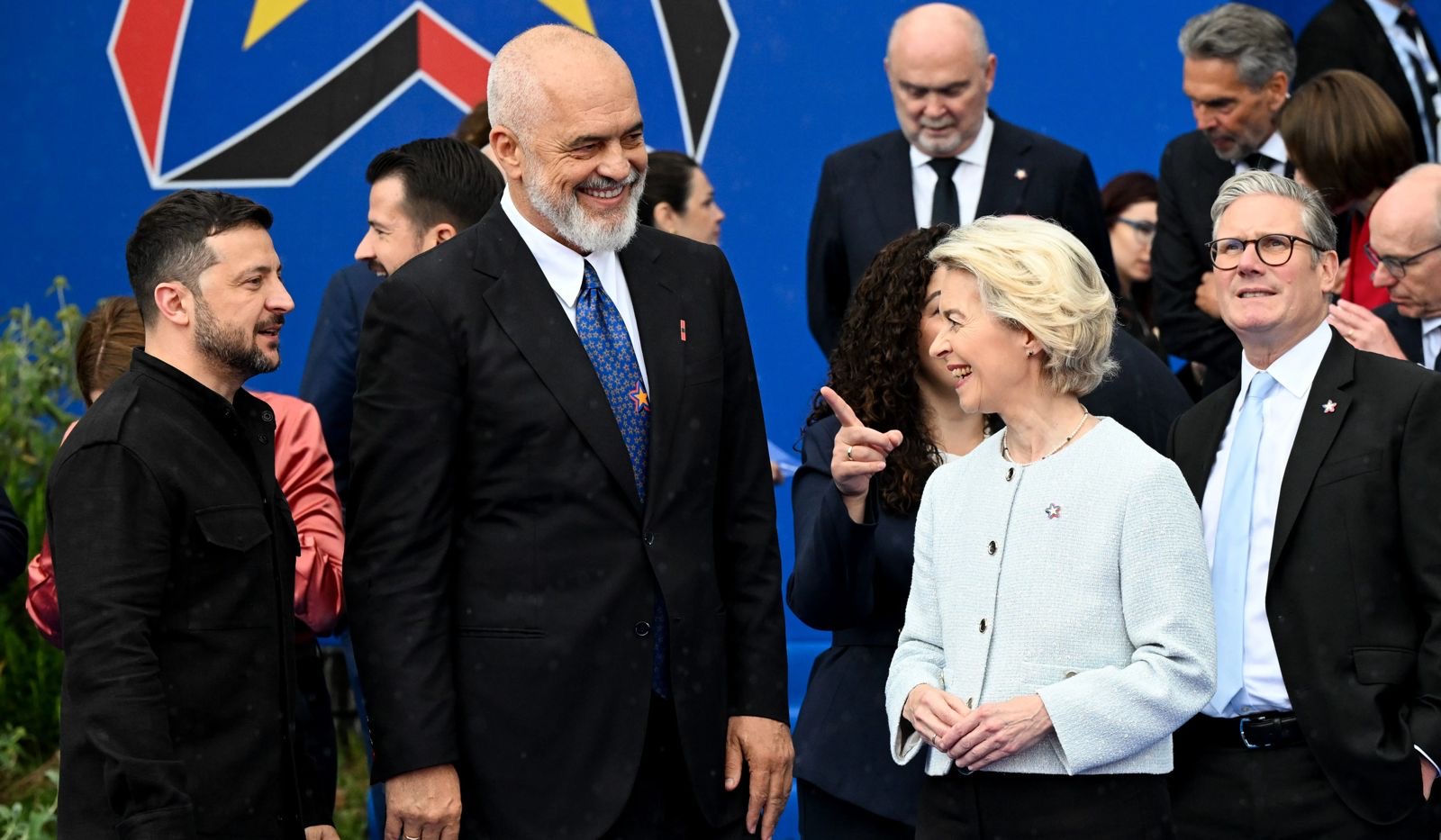
The May 11, 2025, parliamentary elections, Rama’s fourth win, unfolded amid irregularities, with the Giro d’Italia timed to distract and the EU summit days later lending unearned legitimacy.
Voter turnout in November 2025’s partial local elections hit a dismal 18.7% across five municipalities, reflecting disenchantment: fewer votes mean easier control for incumbents, as disillusioned citizens opt out.
Over two decades, U.S. and EU aid has often been co-opted by Rama-linked NGOs, channeling funds into regime-sustaining activities rather than reforms. The Trump administration’s USAID cuts halting grants misused for such purposes, align well with the NSS’s disdain for unaccountable support.
To realign, the U.S. could condition military ties and tech collaborations on electoral overhauls, to boost integrity and turnout, while backing independent audits of aid flows. Albania’s defense spending, hovering at 1.8-2% GDP, falls short of the 5% target, inviting pressure for offsets in troop contributions or anti-corruption measures. Rama’s “unconditional obedience” to U.S. policies, as seen in him lavishly praising Trump after once calling his 2016 win a “disaster” is tactical cover for domestic lapses, but the NSS prioritizes substance over charm.
Alignment on Chinese influence (e.g., Huawei bans) or energy diversification could preserve ties, yet persistent backsliding risks deprioritization, with resources shifting to steadier partners like Poland. In this doctrinal pivot, Albania must choose: reverse elite suppression or face a cooler alliance, where sovereignty demands accountability.
Samson’s closing remains apt: “The United States remains committed to a strong partnership with Europe and working together on shared foreign policy goals. However, this partnership must be founded upon our shared heritage rather than globalist conformity.” Pretentious elites might deem it shallow, but in a careful reading this is everything but that – far from being shallow his call is substantial for the world and vital for America’s real allies. Realpolitik can only be anchored in enduring values that sustain innovation, security, and mutual prosperity amid geopolitical flux.
This article is intellectual property of Albanian Conservative Institute.