By Habjon Hasani
On Thursday, January 29, 2026, Albania’s Prime Minister Edi Rama received an SMS on his mobile phone:
“COELA has issued an official position. I’m sorry.”
The friend who informed him had warned Rama earlier that, in Berlin, the German government was deeply concerned about what it viewed as Rama’s arbitrary protection of Energy Minister Belinda Balluku.
COELA is a working group of EU member states’ ministers for European affairs. It reviews the progress of candidate countries seeking EU membership, including Albania. Representation in COELA is at ministerial level, typically ministers for European affairs or foreign ministers of EU member states.
A senior EU source informed Hashtag.al about what transpired:
“The entire initiative to penalize Albania in COELA has been driven by the German government. They are seriously alarmed by the way Edi Rama is attacking the justice system and dismantling institutions in order to shield Minister Balluku. Germany’s initiative has been strongly supported by Austria, Belgium, the Netherlands, and others, while the governments of Italy, France, and Greece adopted a more neutral stance during the meeting. That said, this neutrality is irrelevant, since even a single country—such as Bulgaria—can impose a veto against Albania. Moreover, Germany is the locomotive of the European Union,” the source said.
The same senior source added:
“At the COELA meeting, it was decided that if Rama continues to defend Balluku’s immunity, the EU will take the unprecedented step of undoing Albania’s entire accession process. This would amount to an exemplary and severe punishment—the first of its kind. Your prime minister is fully aware of this, just as I am telling you now,” the source specified.
Hashtag.al formally contacted the EU Delegation in Tirana today with a single question: how does it comment on the positions taken by the foreign ministers of Germany, Austria, and the Netherlands?
Hashtag.al requested a response within the same day from the EU Delegation; however, this institution does not traditionally provide replies within such timeframes.
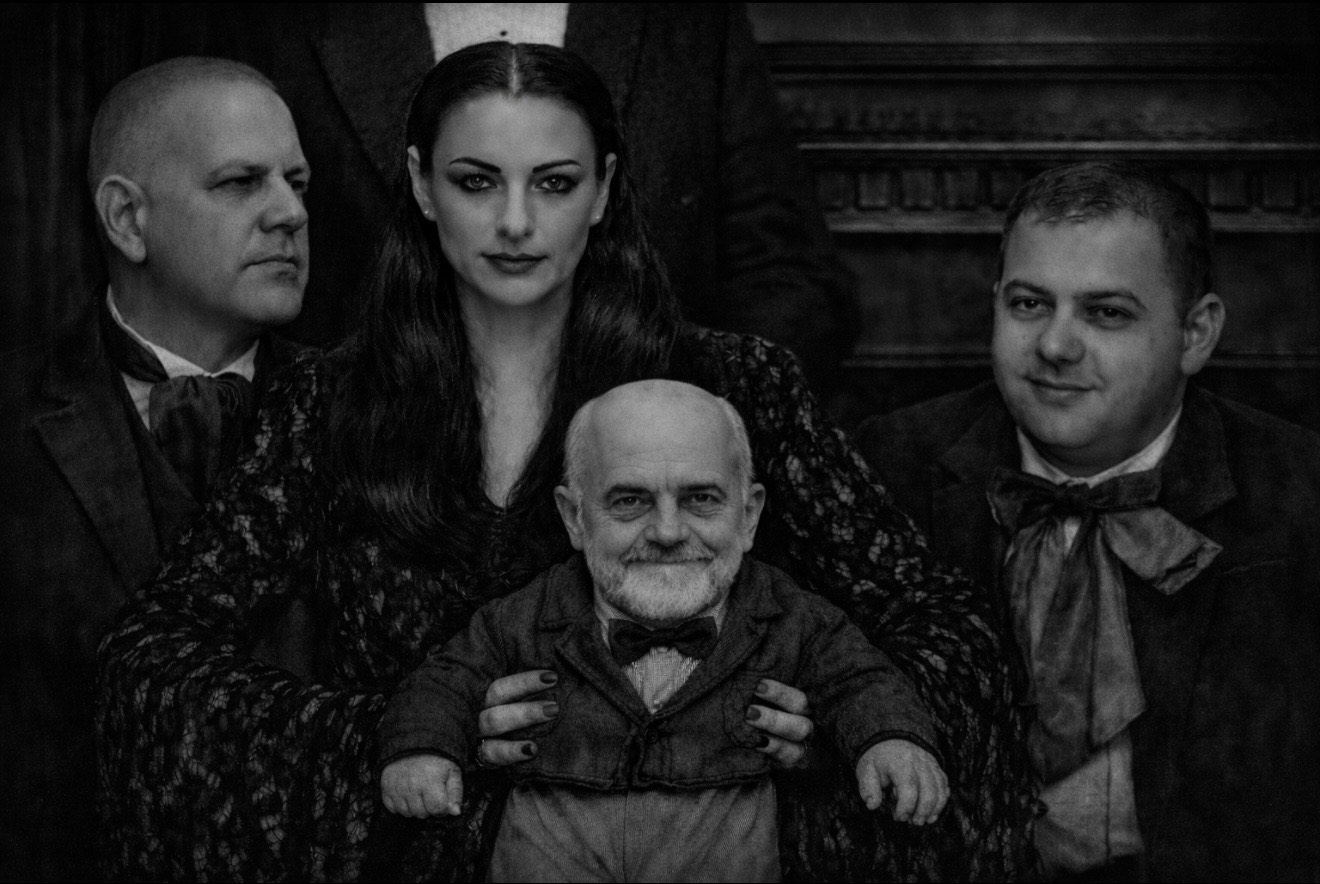
Balluku, Rama, and the Three “Acrobats”
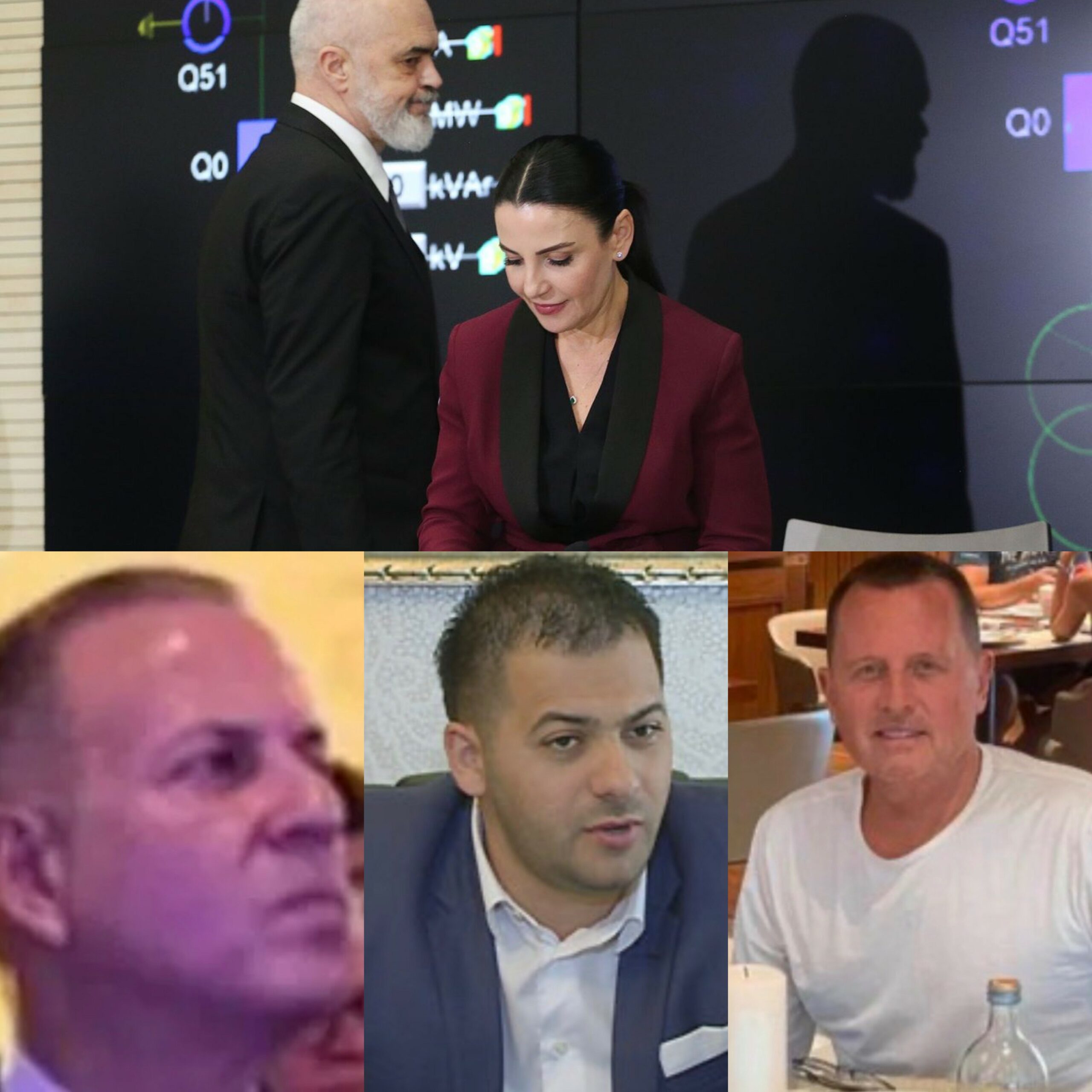
In the spring of 2020, at the height of the COVID-19 pandemic, Energy Minister Belinda Balluku was invited to a Greek island by an Israeli-American citizen named Ron Yeffet.
On the island, a luxury villa resort had been built. Yeffet told Balluku that several of the villas belonged to him, including the one where she would be staying.
Balluku went. The following morning, coffee in hand, standing in the villa’s courtyard, Balluku—who speaks fluent Greek—began chatting with the Greek gardener. Among other things, she asked him about the Israeli-American friend who had invited her, specifically how many villas he owned.
The gardener stared at her in surprise and replied that Mr. Yeffet owned none of the villas and had merely rented them for that weekend.
Balluku realized she had been deceived and manipulated. She informed Edi Rama, insisting that Yeffet was an ordinary fraudster. Rama, however, made it clear that he would keep Yeffet close. In fact, Yeffet is one of Prime Minister Rama’s three preferred “acrobats.”
Initially, Rama—through Balluku—granted Yeffet access to Albania’s oil import sector. There, Yeffet failed spectacularly, leaving several Albanian partners owed millions of euros.
Subsequently, Yeffet attempted to seize control of the electronic distribution market for salaries and pensions (ATMs). Once again, Balluku paved the way through her influence over the Ministry of Finance. This venture also collapsed. It appeared too complex. There was no quick money there either.
Most recently, Yeffet has targeted the Delvina Gas concession. Together with Balluku, he allegedly orchestrated the unlawful arrest of the former owner of the concession, Sokol Meqemeja.
Delvina Gas’s shareholder structure includes a Ukrainian citizen holding 15 percent of the shares, Sergey Probylov. He is reportedly allied with Balluku and Yeffet in an effort to expropriate the concession. Meqemeja acted swiftly, selling the majority stake to a Dutch company with significant connections in Washington. Meanwhile, the Balluku–Yeffet–Probylov triangle has come under the attention of partner intelligence services, which have been briefed in detail by a Ukrainian source on their roles in this affair. Their involvement is documented by foreign partners.
Yeffet is said to enjoy speaking in the name of Prime Minister Rama when plotting illegal schemes with Ukrainian counterparts. This case could evolve into a scandal larger than the Balluku affair itself for Rama.
The second “acrobat” is Ergys Agasi. He bears a strong resemblance to Yeffet in style and behavior. Both favor luxury motorcades and conspicuous exposure accompanied by guards from elite security and police units. Although both are supported by the prime minister to handle sensitive, behind-the-scenes matters, it is striking that they do everything possible to attract attention and appear extravagant.
As a rule, one would expect them to keep a low profile.
Video recordings and documents seized by Albania’s Special Prosecution from Agasi have triggered a chain reaction that has significantly worsened Edi Rama’s position—both as prime minister and as head of his political household.
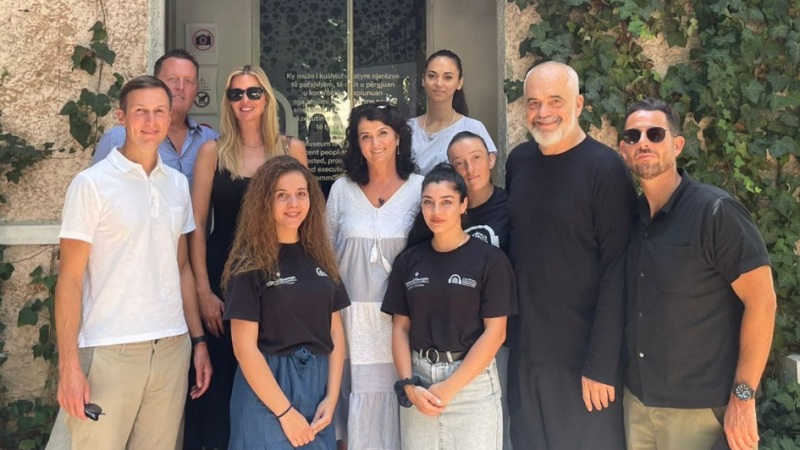
The third “acrobat” is American and was even part of the Trump administration. His name is Richard Grenell. In addition to being a behind-the-scenes supporter of Belinda Balluku, Grenell has openly defended the controversial energy-ship project in Vlora, which was later found to involve Iranian businesses sanctioned by the United States. (read here)
Most recently, Grenell brought President Trump’s daughter, Ivanka Trump, to Albania, while her husband, Jared Kushner, has interests in tourism projects in the Bay of Vlora.
The services Grenell is providing to Rama appear to fully justify his personal benefit, but they may also be exposing Trump’s daughter and son-in-law to an international scandal.
Part of the project involves the Zvërnec area, where land ownership belongs to an Albanian figure mentioned in international media, Artur Shehu.
Further advancement of the project, especially ahead of U.S. midterm elections, could serve as a narrative and media scandal for Trump’s political opponents, linking Trump’s daughter and son-in-law to an alleged trafficker and Albanian gangster. Such a storyline would be highly impactful in the U.S. media.
All this risk, because Grenell is eager to gain rapid favor with Edi Rama—and because Rama himself has an acute need to maintain his own “acrobat” in Washington.
As Edi Rama appears to be walking through a minefield—one detonated by Balluku and her three acrobats—facing a storm of scandals and mounting pressure from the European Union, he has inexplicably chosen to continue defending Balluku.
It is an open secret that Rama has been given assurances that he himself will not be harmed by the Balluku case. Yet he still refuses to let her go.
This leads to a logical question:
What greater shame does Belinda Balluku know about Edi Rama that makes all the storms he is currently facing seem like lesser disgraces by comparison?
Hashtag.al